
ARTIST STATEMENT
Jean-Claude Desmergès’ work unfolds at the intersection of phenomenology, anthropology, and poïetics, forming a practice grounded in lived experience. Trained as both an artist and a theorist, he initially developed a gestural abstract painting practice before stepping away from the art world to pursue academic research on perception.
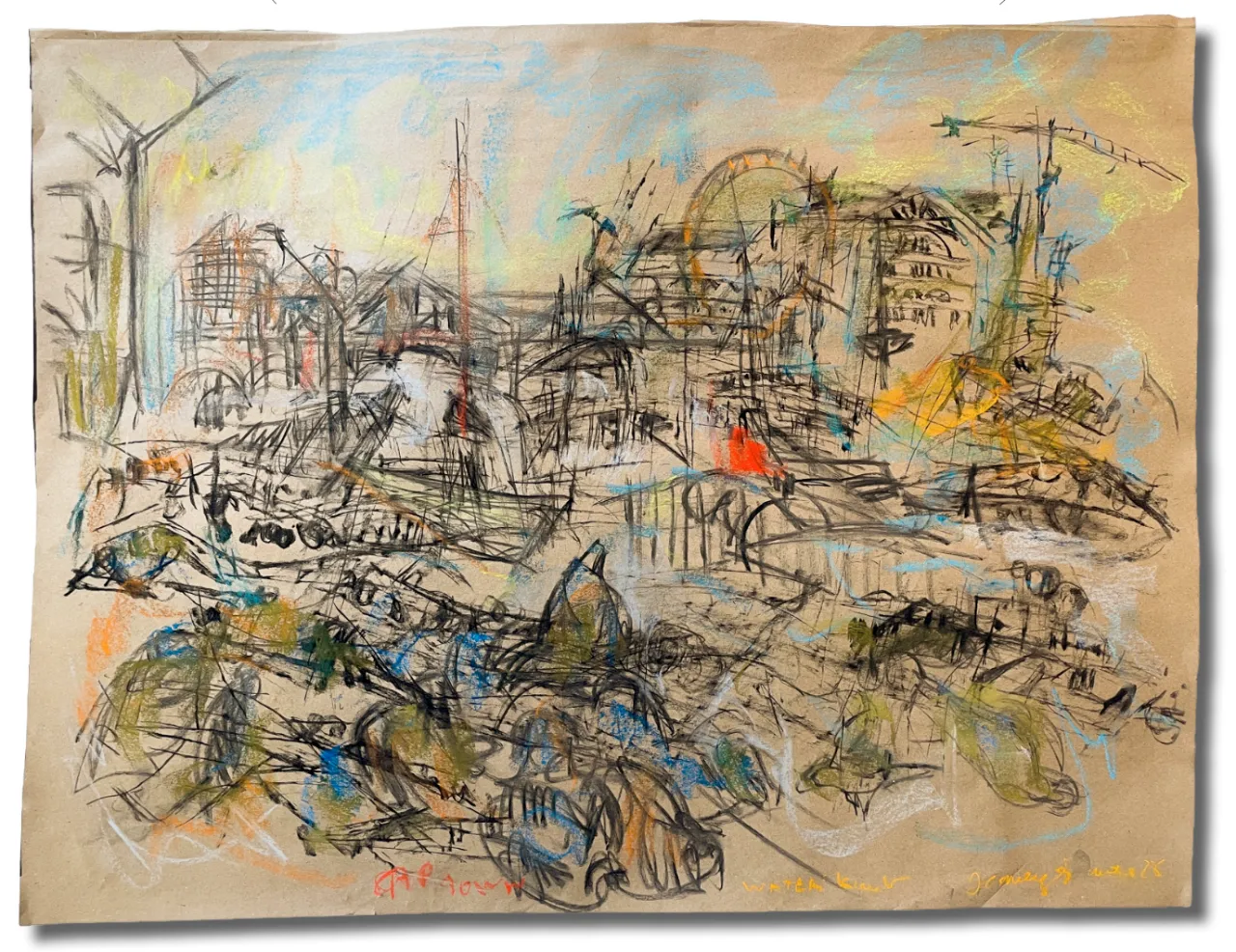
This rupture proved foundational. Influenced by phenomenological thought, Desmergès gradually abandoned representation in favour of immersion, conceiving art as a process of entering the world rather than depicting it. Since 2007, his expeditions—from Moroccan deserts to West and Central Africa—have redefined his artistic language. Drawing directly on the ground with charcoal, clay, and organic matter, he produces works that are inseparable from their context. These gestures function less as images than as traces: ritual acts that register presence, memory, and transformation.
Engaging with local practices without appropriation, Desmergès positions himself as a participant-observer. His encounters—whether with Vodun ceremonies in Benin, fishing communities in Senegal, or mining landscapes in South Africa and the Congo—inform a body of work that addresses ecological fragility, spiritual resonance, and the invisible structures of lived reality.
His art operates within a tension between chaos and form, material and immaterial. By embracing ephemerality and transformation, Desmergès proposes a poïetics of relation: an art that does not fix meaning but allows it to emerge through experience.
