ARTIST STATEMENT
Tumelo
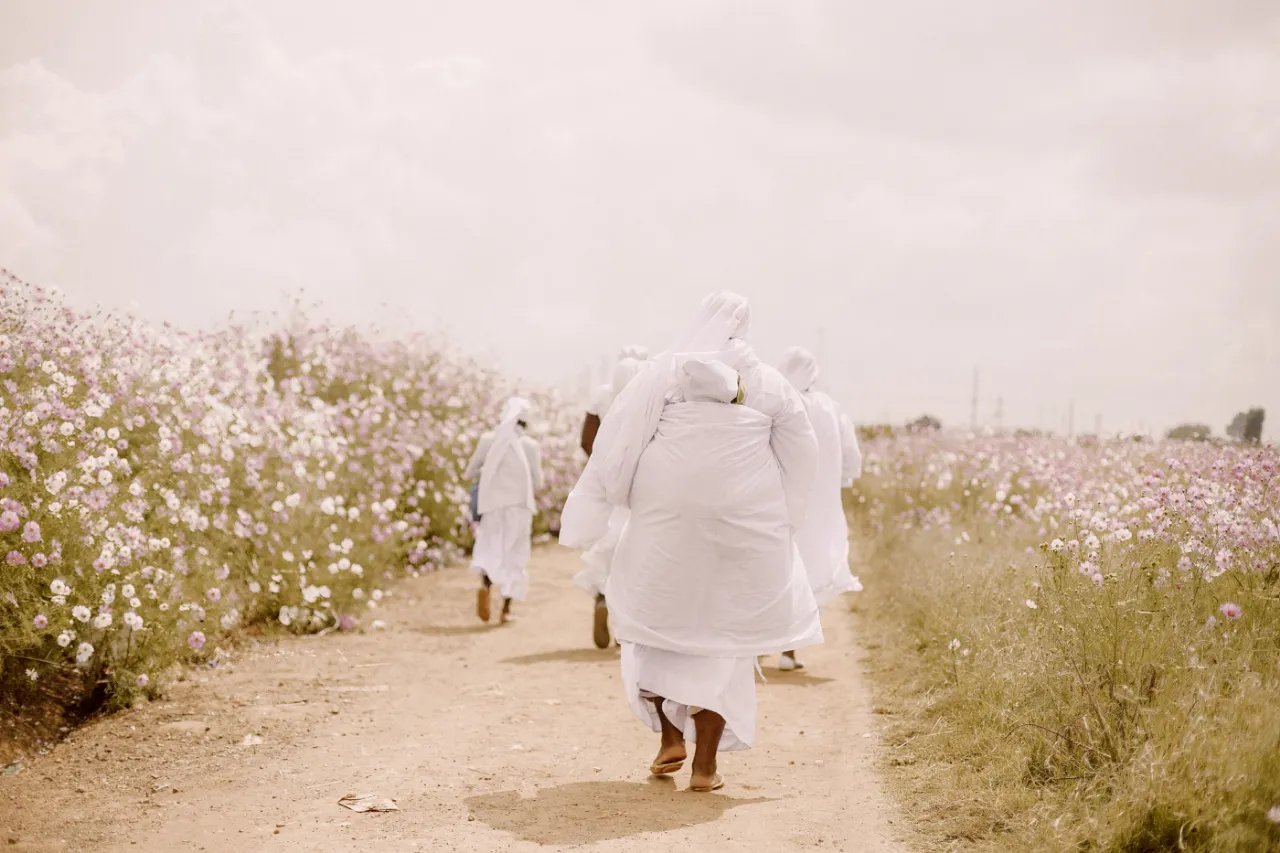
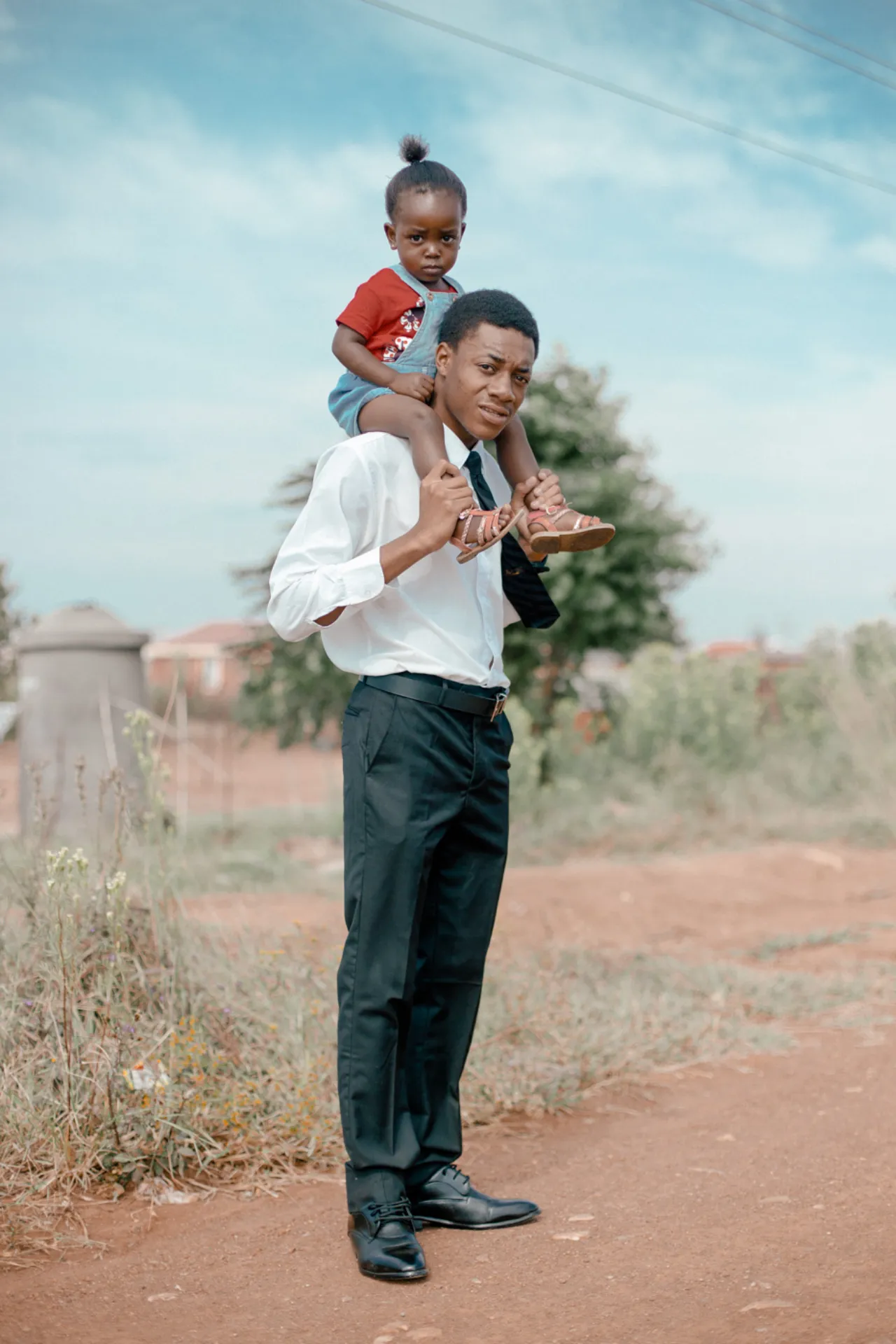
Both bodies of work belong to my series titled Tumelo, a word that directly translates to “Faith.” I created Tumelo as a way to explore the duality within faith and religion, revealing the tension between the absurdity of blind faith and the profound beauty of human beings choosing to believe in something greater than themselves.
This project also served as an ongoing conversation with myself regarding my beliefs. After years of studying the Stoics’ idea of Amor Fati — Latin for “love of fate” — I kept returning to the concept of not only accepting but actively embracing all aspects of life, both good and bad, as necessary. Considering this idea in the context of religion naturally led me into a conversation about blind faith.
Many people, like those depicted in these photographs, sacrifice significant time, money, and resources to prove their faith. From a social perspective, this form of blind faith has given rise to new movements of “mushroom churches” and self-appointed priests or prophets who may exploit that devotion. We have seen churches appear overnight and disappear just as quickly, sometimes taking their followers’ hopes and resources with them. Countless stories exist of priests fleeing after financial misconduct or churches collapsing under the weight of deceit.
As someone raised within Christianity, I found myself questioning whether my own belief still served me or persisted simply because it was inherited. Was I choosing this faith, or was I fated to carry it because it shaped my childhood?
This project became my way of challenging that question. Through the camera, I examined the tension between devotion and doubt, between the desire to believe and the fear of being misled. Each image reflects my attempt to understand whether faith can be an act of conscious embrace, or if, for many of us, it remains an unexamined inheritance.
The duality of all this, fortunately, lies in witnessing unshaken faith. In a world scarred by war, famine, poverty, and endless suffering, such devotion is one of the most quietly beautiful things you can witness. If you’ve ever driven past an open field and glimpsed strangers gathered in its center, or by a lake kneeling together in prayer, you understand what I mean. The quiet ritual of Sunday mornings, the uniforms and garments of faith worn with pride, the offering of one’s last coin to causes greater than oneself — it all carries a fragile, undeniable grace.
I don’t know if religion is merely a socio-ideological dance humans invented millennia ago to give life meaning. I don’t even know if God truly exists. But if there is a moment I can point to and say, perhaps God does exist, it is that Sunday morning.
ARTIST BIOGRAPHY
Obakeng Molepe is a passionate visual artist who moves between Cape Town, Johannesburg, and the wider world. His work reflects the perspective of life as a Black youth in post-apartheid South Africa. Molepe’s technical abilities developed early, as he spent his adolescence building computers. Technology has been a key influence on his practice, and his curiosity about how things work led to a commitment to mastering the camera and postproduction techniques.
He studied at Vega, where his practice was enhanced by both a theoretical approach to the medium and technical photography skills. His precise craftsmanship and personal connection to his subjects result in a powerful body of work that showcases life in South Africa.
Molepe’s main objective is to create work that sparks dialogue about society. Common themes he interrogates include identity, mental health, male masculinity, and life in his community. Johannesburg, the city, is an endless source of inspiration for him. Molepe emphasizes the beauty of his environment by capturing his subjects with the dignity they deserve. By showcasing life in the township, free from a Western gaze, Molepe reimagines representation and presents a true reflection of home and what it means to be South African.
