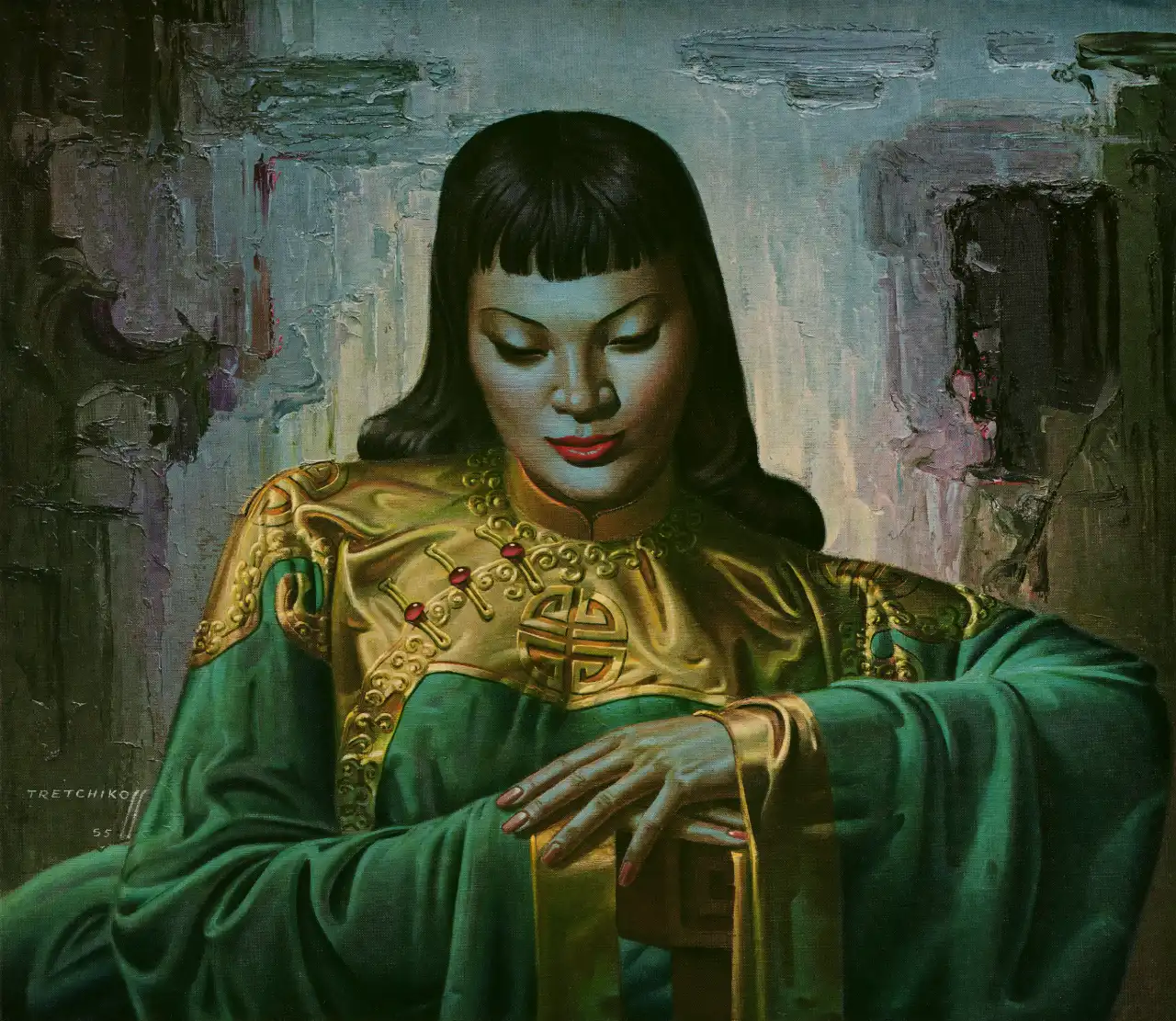
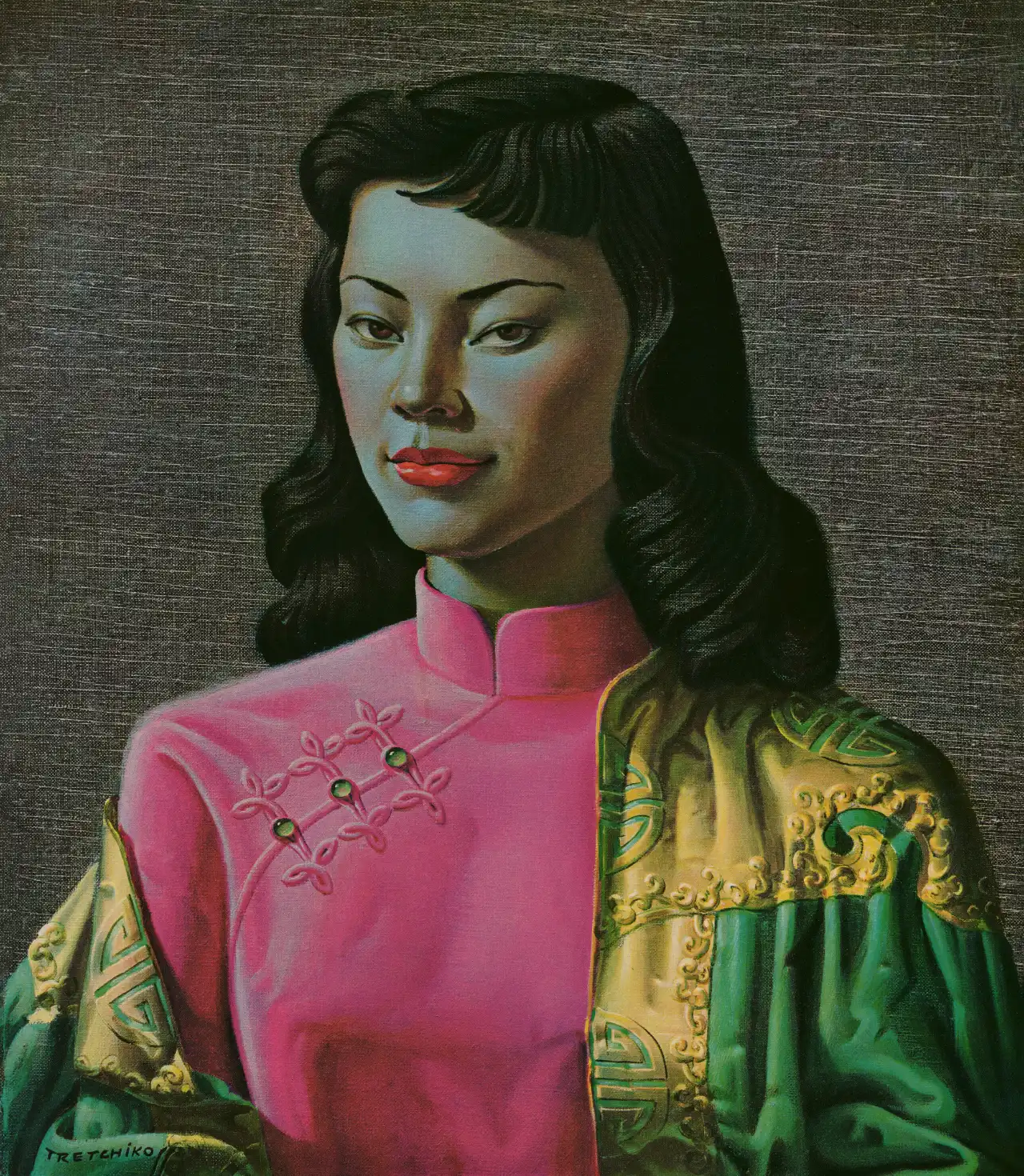
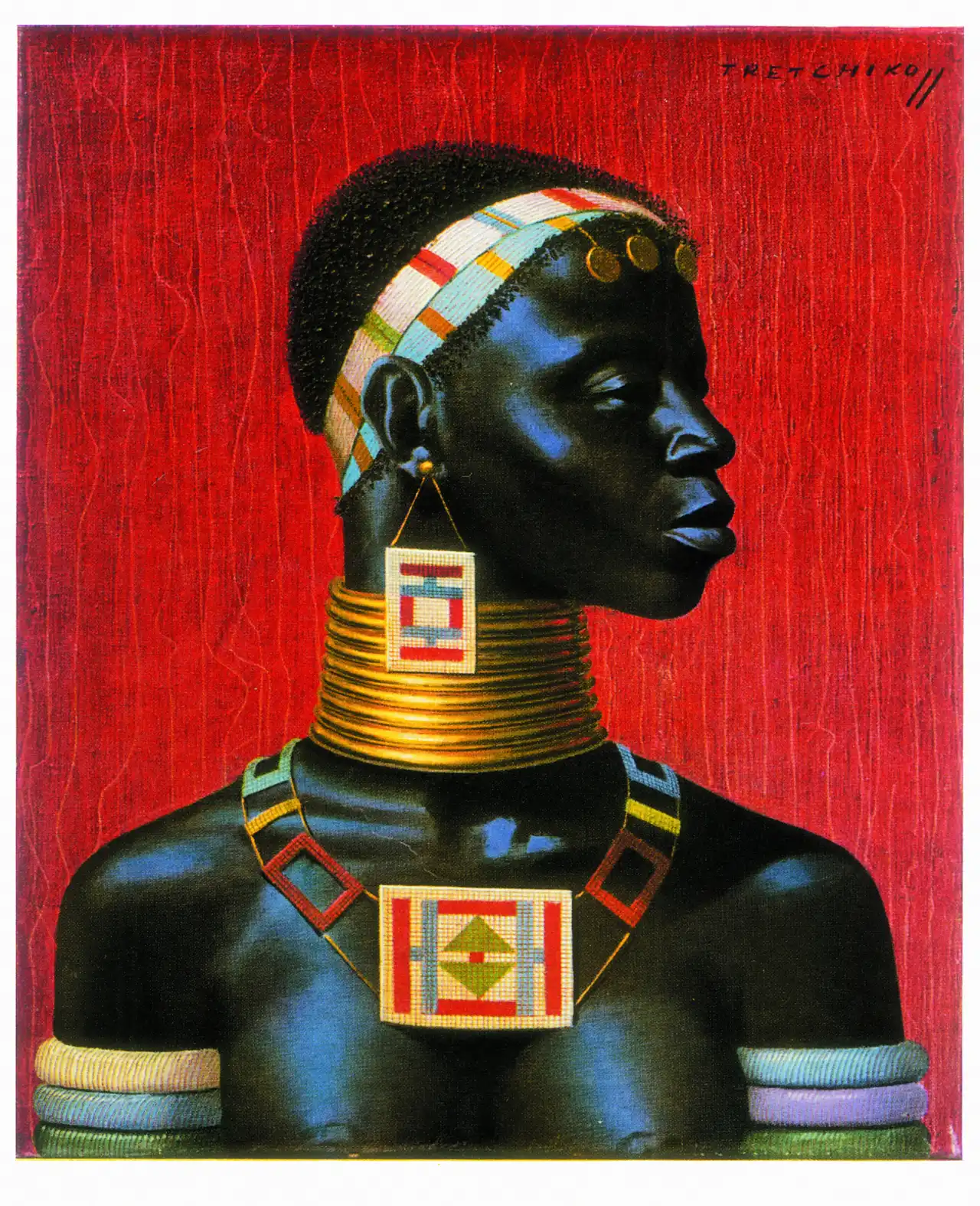
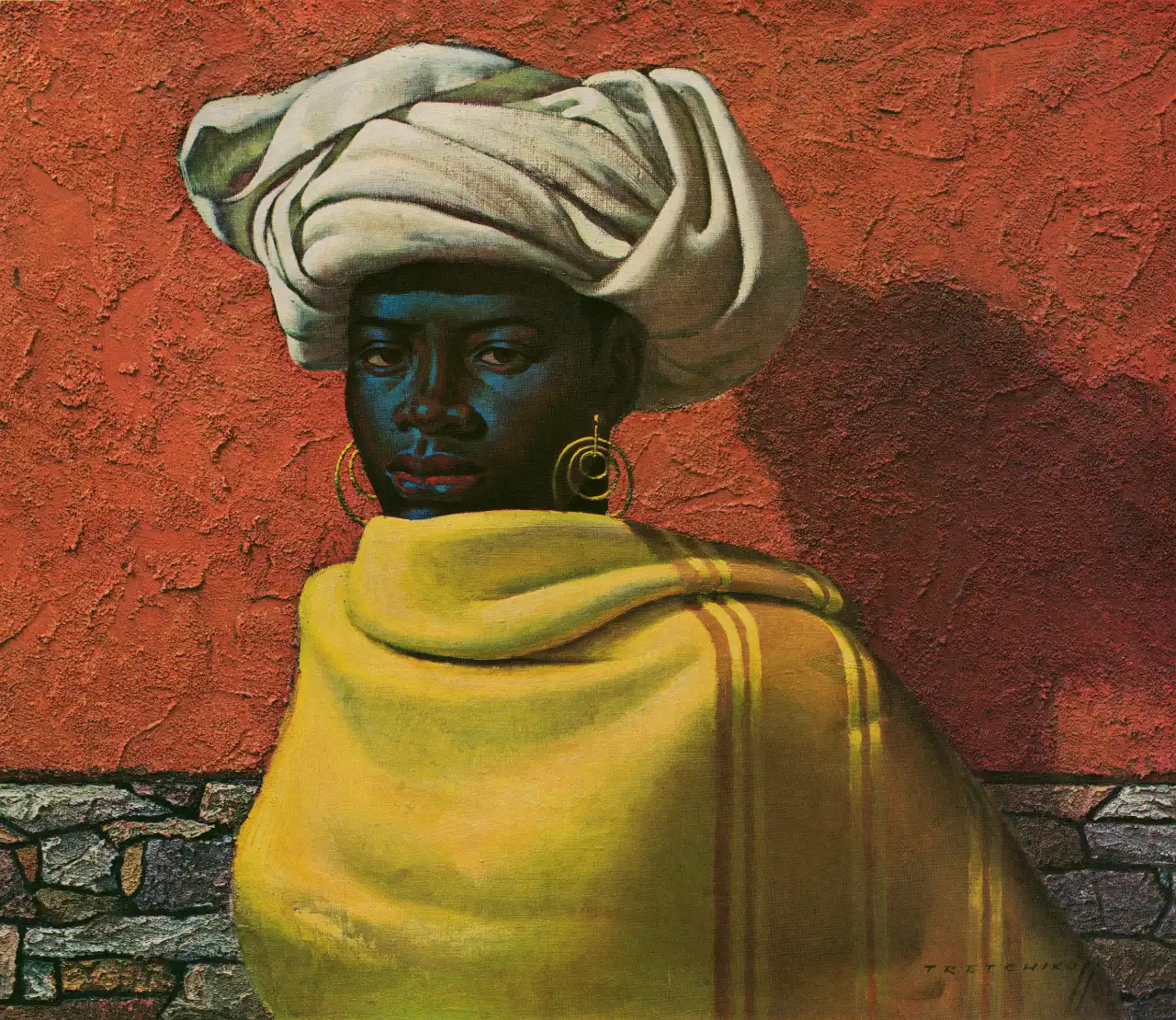

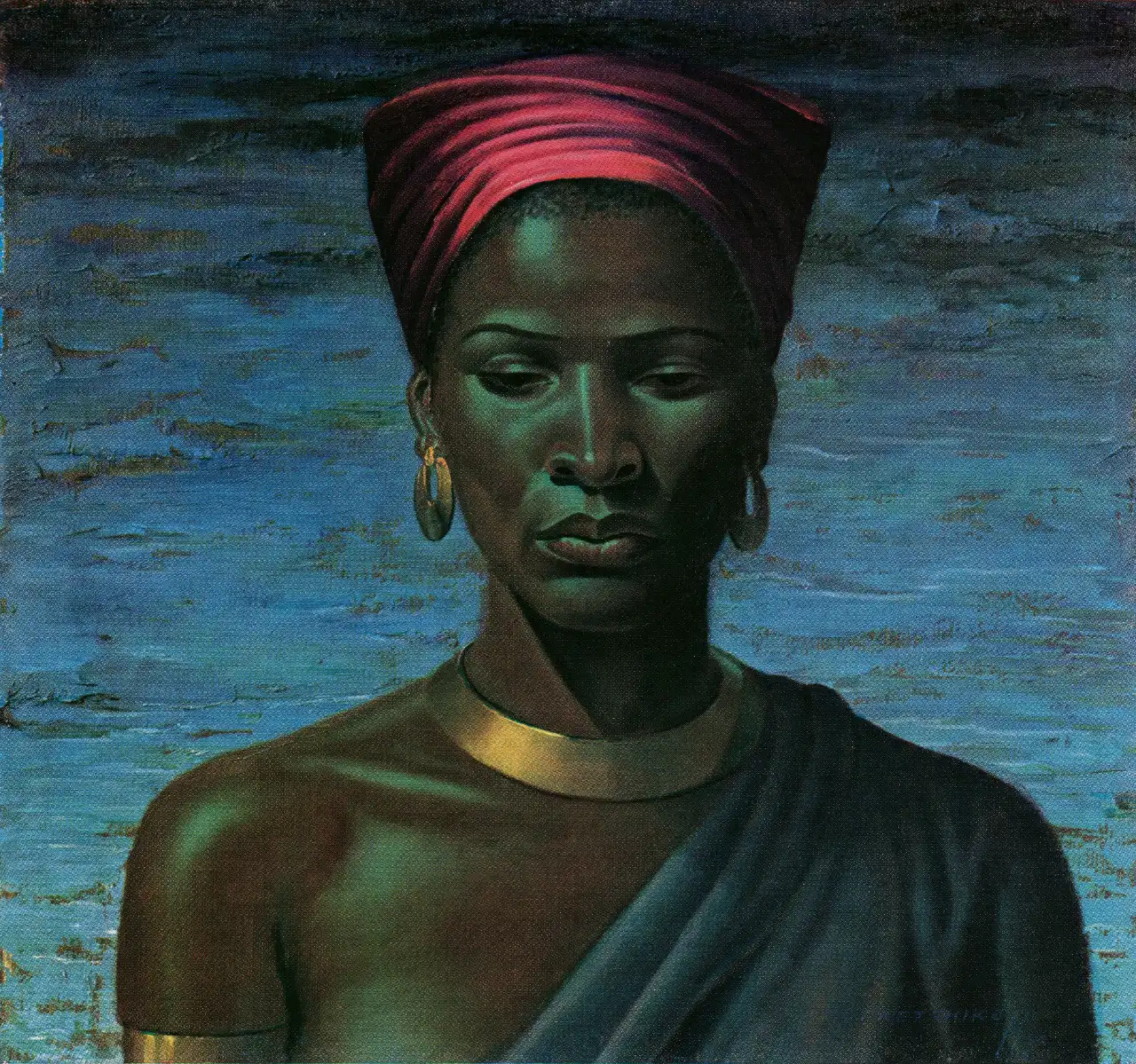

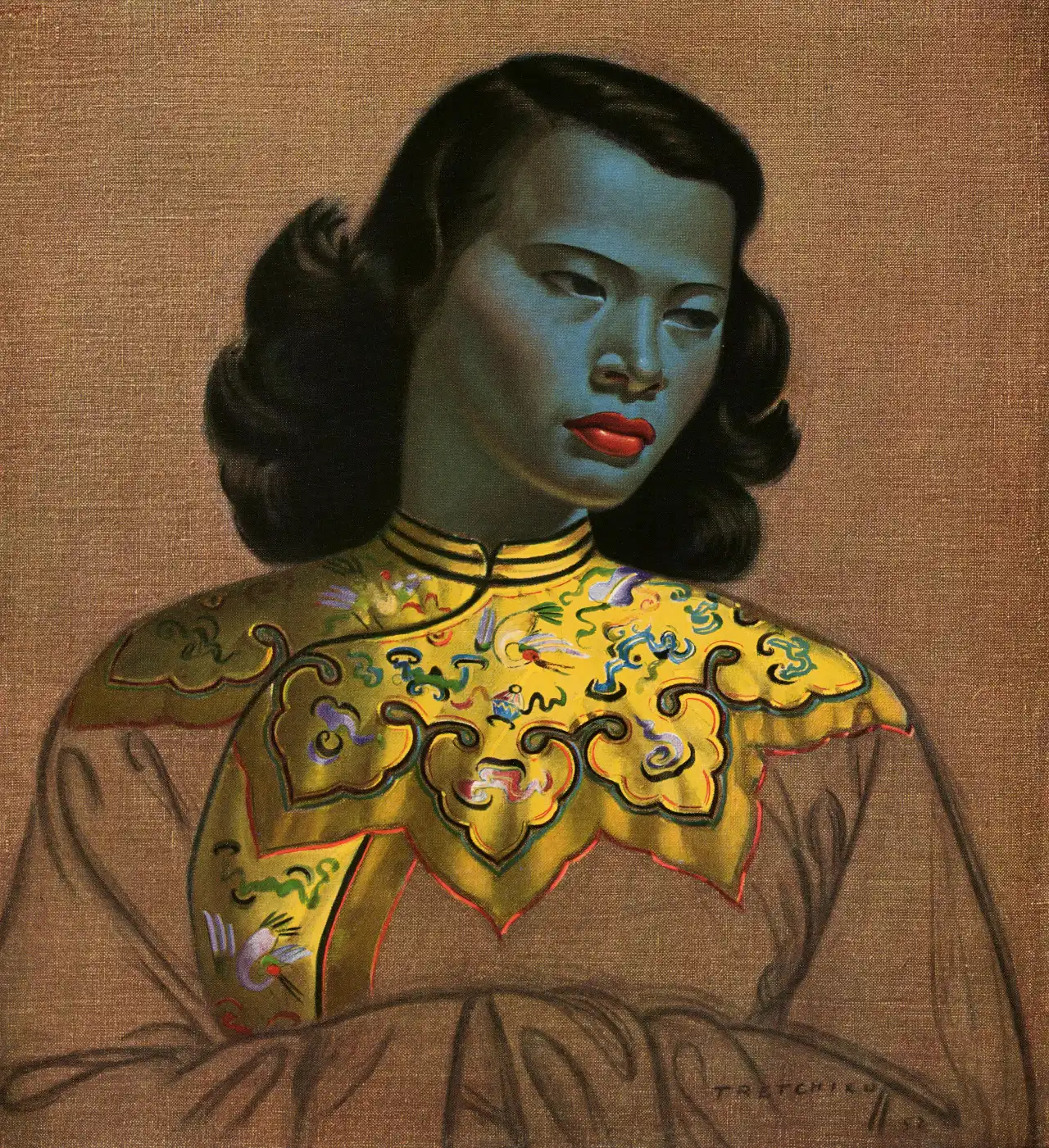


In this exhibition, Vladimir Tretchikoff’s portrait series represents a collective narrative, allowing the subjects to “speak” to each other across the space. These faces, some familiar and iconic—such as The Chinese Girl, one of the most reproduced prints of the 20th century—others more intimate, form a conversation about identity, culture, and beauty across borders. Each subject, painted in vibrant colours and bold strokes, carries their own story. Yet, when viewed together, a deeper, shared language begins to emerge.
Tretchikoff’s portraits are not merely representations of individuals; they are symbols of humanity. When gathered, they reflect not only their diverse origins but also a universal spirit that transcends race and place. Each figure embodies an ideal of beauty that is both exotic and familiar. The Lady from the Orient gazes with quiet elegance, her serenity mirrored in the subtle strength of Miss Wong. These portraits exchange looks across the room, like old friends who have lived through the same story but express it differently.
When placed side by side, these works begin to communicate—not only with the viewer but also with one
another. The delicate, intense expression of Zulu Girl contrasts with the cool allure of The Chinese Girl, yet both speak of a kind of beauty that captivates and defies simple definition. In this exhibition, the cultural tensions and harmonies between his subjects become more vivid. The portraits carry their own individual histories, yet together, they weave a richer narrative of global beauty and shared human experience.
Tretchikoff always sought to reveal the inner lives of his subjects through the external colours of their skin and clothing. Now, as they gather here, it becomes clear how they are united by a common, unspoken emotion—an aura that lingers between them, like an unbroken thread of connection. Their differences create a dialogue of contrast, while their similarities echo the universal. In this context, each painting becomes not just an isolated work but part of a larger mosaic—one that reflects the diversity, mystery, and unity of the human spirit.
This exhibition invites viewers to witness this conversation and listen to the silent dialogue these portraits create. Their gazes draw the viewer in, revealing a hidden language—one that speaks of beauty, diversity, and the many faces of humanity.
Vladimir Grigoryevich Tretchikoff was a self-taught artist, best known for his iconic painting Chinese Girl (commonly referred to as The Green Lady), which became one of the best-selling art prints of the 20th century. Born in Petropavlovsk (now Petropavl, Kazakhstan) in 1913, Tretchikoff’s family fled Russia during the revolution and settled in Harbin, China.
He began his artistic career in Harbin, working as a scene painter at the Russian opera house and receiving early commissions. Tretchikoff later moved to Shanghai, where he worked as an illustrator and art director, before relocating to Singapore just before World War II. During the war, he became a propaganda artist for the British but was captured by the Japanese after his evacuation ship was bombed. He spent the remainder of the war in Java, where he continued painting under Japanese supervision.
After the war, Tretchikoff reunited with his family in South Africa, where he settled in 1946 and became a prominent figure in the local art scene. His bold, vibrant portraits of Asian women, as well as his still lifes, quickly gained popularity. While many art critics dismissed his work as kitsch, Tretchikoff’s art appealed to the public, and his prints became ubiquitous in homes across the world during the 1950s and 1960s.
Tretchikoff’s exhibitions in the United States, Britain, and South Africa attracted record-breaking crowds. In 1962, over 205,000 people attended his show at Harrods in London. Despite criticism, Tretchikoff embraced his commercial success, proudly acknowledging his popularity with the masses. He passed away in 2006 in Cape Town, leaving behind a legacy as one of the most commercially successful artists of his time, bridging the gap between popular art and fine art.
